News from TREE
LATEST TREE NEWS
A key plant for protecting the world's tallest natural pyramid has been found in Colombia.A key plant for protecting the world's tallest natural pyramid has been found in Colombia.
JULY 2026
Provided to TREE by Saúl Ernesto Hoyos Gómez
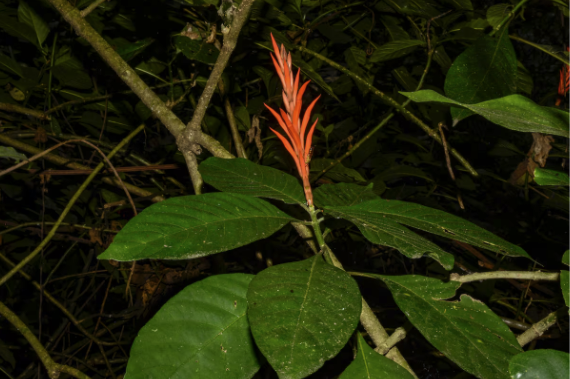
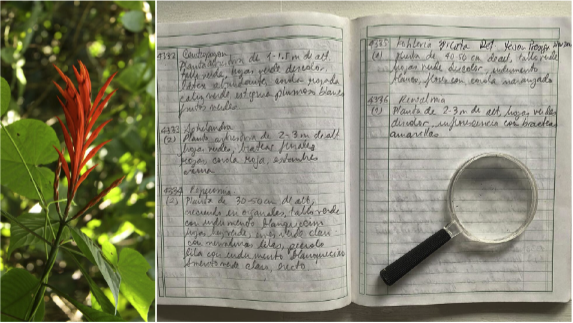
“Aphelandra. A shrubby plant 2 to 3 meters tall, with green leaves, red floral bracts, a red corolla, and cream-colored stamens.” These were the first notes Saúl Ernesto Hoyos Gómez wrote in his field notebook upon seeing *Aphelandra montis-tusae* for the first time. Until that day—December 19, 2020—there was no written record of the plant’s existence anywhere in the world. Although little is known about this botanical discovery, it is believed that the plant—characterized by large, striking red crowns and pollination by hummingbirds—was of great importance to the indigenous peoples who inhabited Cerro Tusa (located in the municipality of Venecia, Antioquia) due to its prolific nature. “And who knows if it might also have medicinal properties?” muses the botanist, who laments how little is known about “all the biodiversity that surrounds us.” Hoyos asserts that this signature flower will aid in the conservation of the sacred mountain. “It will be to this mountain what the *frailejón* is to the *páramo* ecosystem. The discovery is just the first step, and Cerro Tusa will become the Machu Picchu of Antioquia,” he says.
Cerro Tusa is the tallest natural pyramid in the world (1,950 meters). Located in Antioquia’s Central Cordillera, it stands out from surrounding mountains due to its conical shape and its status as part of an extinct volcanic system within the Andes. This system was last active five million years ago and attracted indigenous communities over two millennia ago. Although the mountain's steepness and humidity seem to rule out the hypothesis that people actually lived there, Pablo Aristizábal—an archaeologist and leading expert on the are —asserts that it was a site for celebrations and. ceremonies. "It was a sanctuary for them. Precisely because of the volcano's minerals, the site's energy was very special," he explains by phone. The mountain was confiscated from a notorious drug trafficker in the early 2000s and is now managed by Comfama, Antioquia’s Family Compensation Fund.
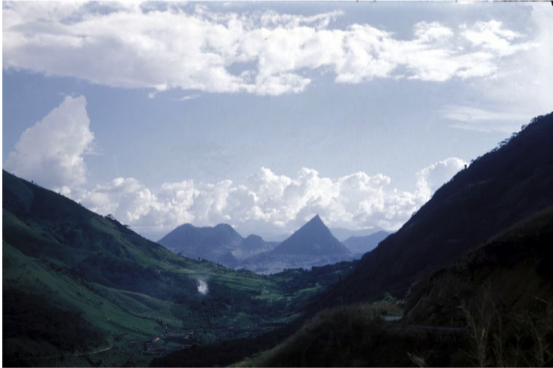
For 28 years, Aristizábal has been exploring the area and striving to protect it due to its significance. According to his research, the site symbolized the three levels of the cosmos in pre-Columbian worldview. "The underworld, the middle world, and the upper world were all represented here. It was—and remains—an undeniably important place" he recounts. After excavating a 600-meter stretch (out of a total 15-kilometer expanse), researchers discovered up to 6,000 ceramic artifacts and finely polished, painted axes—some even shaped like bats—that were presented as offerings to the gods.
This team has also encountered oncillas, jaguarundis, night monkeys, foxes, howler monkeys, sloths, and anteaters, among others. “This place is like a sort of genetic island where, due to the steepness of the mountain, the flora and fauna have been preserved. It is an exception because the surrounding area has seen extensive deforestation for coffee farming and cattle ranching. The discovery of the plant reaffirms the need to conserve it.”
However, the process of classifying this plant as a new species was a painstaking, meticulous undertaking. It began with an initial collection, during which Hoyos carefully separated each part of the plant and the associated data—such as GPS coordinates pinpointing the exact location. The samples were then treated with
alcohol to preserve their color; once in the laboratory, they were oven-dried before being formally added to the herbarium collection. The biologist, who has over 25 years of experience, contacted John R. I. Wood, a specialist in the *Acanthaceae* family and a researcher at the Royal Botanic Gardens in London. Wood examined the specimen Hoyos had collected, and together they compared it against all relevant scientific
databases. "We found no matches, so we were certain. There was no record of anything like it." These findings were detailed in a study published in the scientific journal *Kew Bulletin* in May 2024.
Many questions remain. The size of the species' population, whether it exists outside the hill, and the potential threats it faces are all unknown; however, we do know that its protection is inextricably linked to the conservation of the soil, the climate, and the unique conditions of this area. For this reason, Comfama will add the site to its portfolio of parks dedicated to preservation and regeneration—joining La Samaria Wetland Park in Puerto Berrío and Biosuroeste, located between Támesis and Valparaíso. "This natural treasure will bring together a commitment to caring for all living things—as well as historical, archaeological, natural, and ecosystem heritage—with leisure, the care of our physical and mental health, and the preservation of our ecosystems," explains David Escobar Arango, Director of Comfama. He assures that the site will remain open to the public, allowing anyone to come and "marvel at its breathtaking beauty." In late March 2023, the first phase of construction began for Cerro Tusa Park, which will feature approximately 1,200 square meters of built space using lightweight structures designed in harmony with the local landscape.
“I don’t believe in political boundaries” Hoyos laughs shyly when asked about the number of species he has discovered over the course of his career. “Are you going to make me count them up?” he asks with amusement. After a brief pause, he answers: nearly two dozen. “But beyond the number, I have played a part in documenting the biodiversity of Colombia—and the world—because, as a true biologist, I don’t believe in political boundaries,” he adds. If one were to take a snapshot of Colombia’s biodiversity, the Humboldt Institute
estimates that the country is home to 11% of the world's natural wealth. Estimates point to more than 28,000 endemic species out of a total of around 350,000. However, experts like Hoyos know the true number is far higher. "We live with our backs turned to the world's natural wealth. And here in Colombia, too—we simply aren't aware of it," he laments.
For this biologist, his profession plays a crucial role in the fight against ecosystem loss driven by global warming and human mismanagement. Yet, he remains hopeful. He recalls how the discovery of a rheophytic palm (one that grows on rocks along riverbanks) along the Samaná River helped halt the construction of a dam." We named it after the company—*Aiphanes argos*, after the Grupo Argos firm—and told them:
'It’s up to you if you want to kill your own child,'" he recounts. "We can spend our lives
thinking about what politicians ought to do, or we can look at how *we* can bring
about change ourselves," he concludes.